
TUTO : RECIPE FOR MAKING YOUR OWN VEGETABLE-BASED INKS

Did you know? You can easily make inks from plants, flowers, fruit and vegetables! Simply boil them in a little water and filter the juice. In the tutorial below, I'll show you how to add vinegar or bicarbonate of soda to change the colour, sometimes in surprising ways!
Are you ready? Pick, harvest, cook and filter!
Here, we're going to make four different coloured inks using red cabbage and beetroot.
Hardware
- Red cabbage
- Beetroot (raw or cooked)
- White vinegar
- Bicarbonate of soda
- Kitchen knife or mixer
- Saucepan
- Colander
- Water
- Bottles
- Watercolour paper
- Watercolour brush
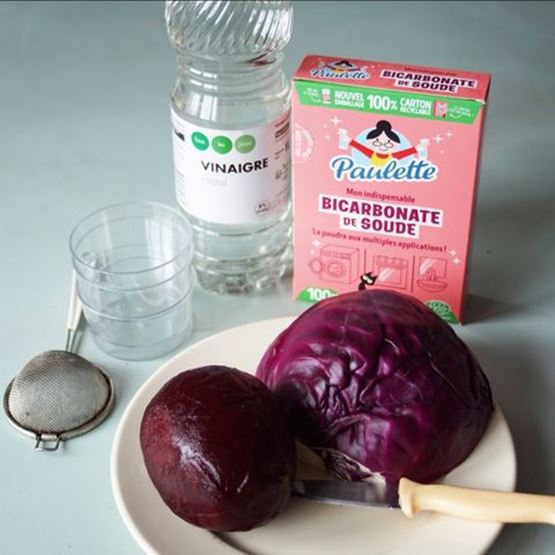
Directed by
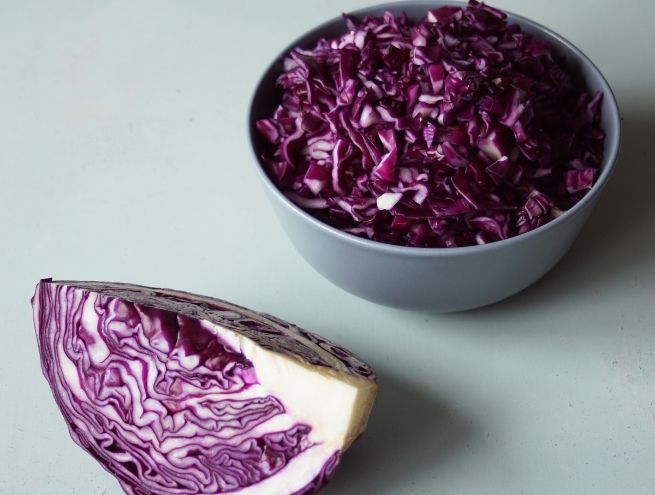
Stage 1
- Finely chop the red cabbage.
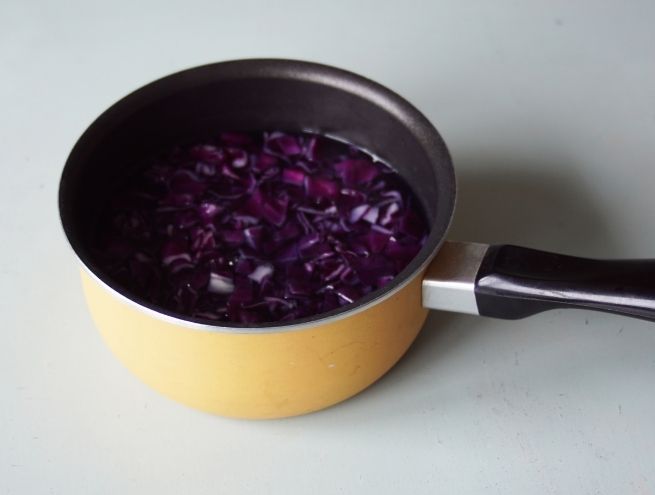
Step 2
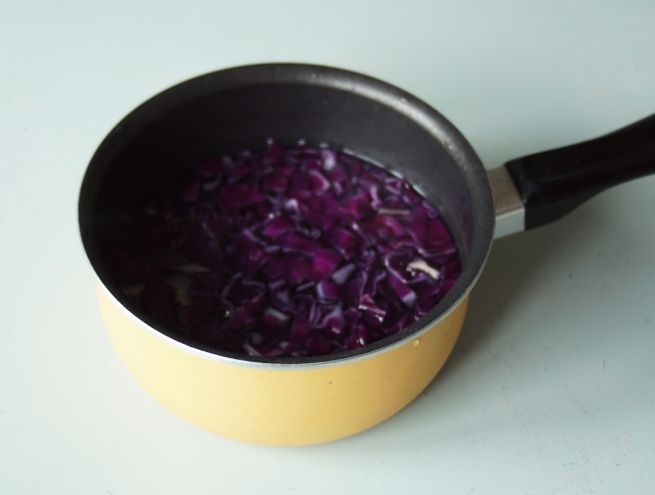
- Place half the mince in a saucepan and cover with water, just to the brim, without drowning it. Boil for 10 to 15 minutes.
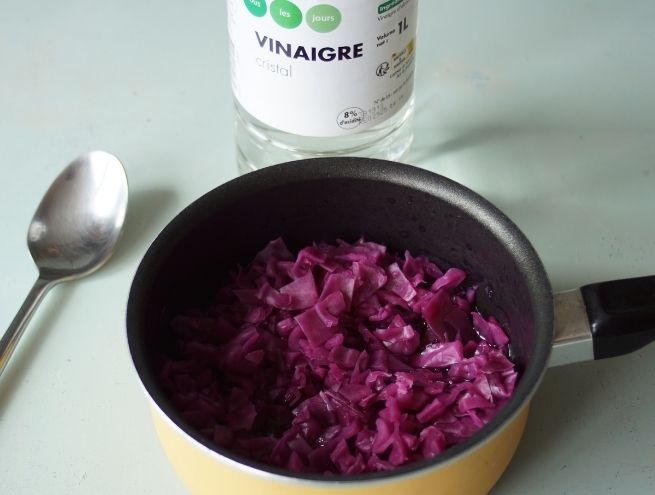
Step 3
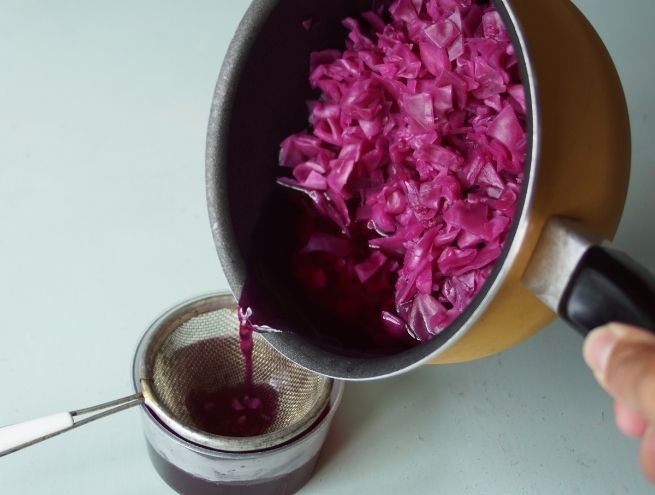
- Add 3 tablespoons of white vinegar during cooking to maintain the pink/purple colour of the cabbage. Leave to cool.
Step 4
- Strain the juice through a sieve into a bottle.
Step 5
- Repeat step 2 with the other half of the mince.
Step 6
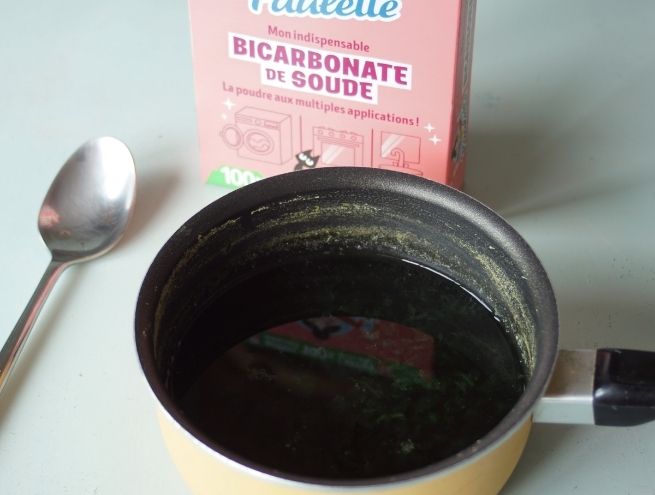
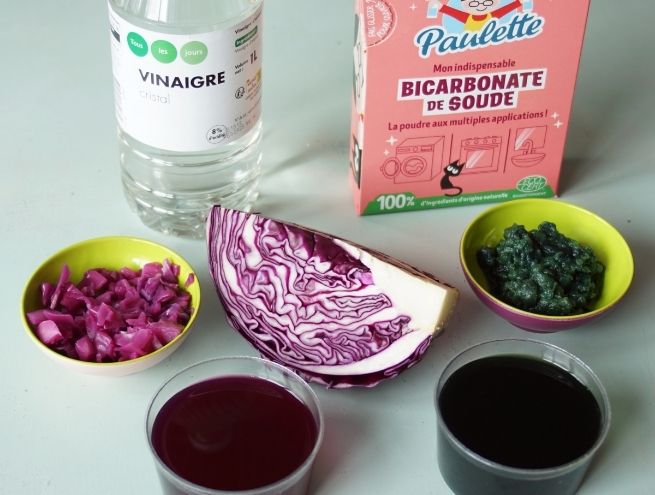
- This time, while cooking, add a spoonful of bicarbonate of soda to turn the colour green. Be careful, the bicarbonate will cause the mixture to foam. Leave to cool.
Step 5
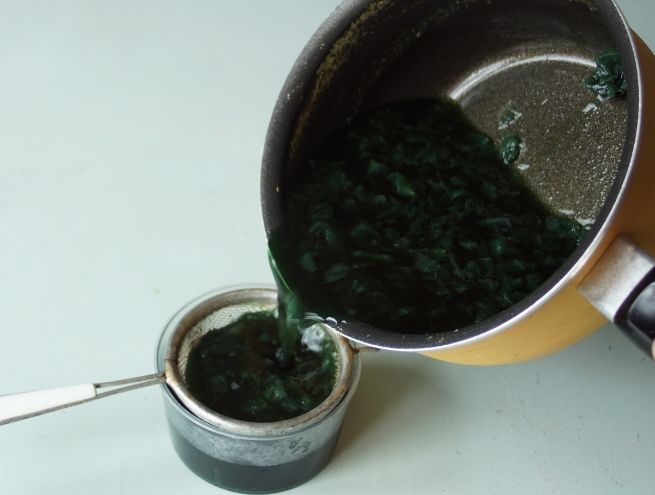
- Strain the juice into a bottle.
Step 5
- Just look at how the simple addition of vinegar or bicarbonate can produce a variety of colours from the same plant material!
Step 5
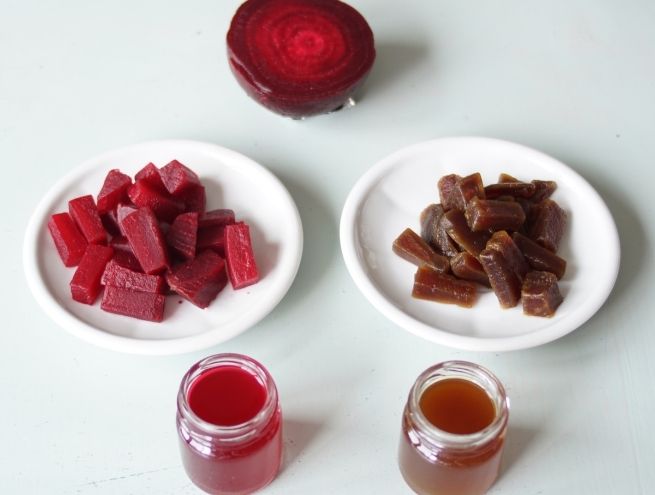
- Follow the same steps with beetroot to obtain bright pink ink with vinegar and orange-yellow ink with bicarbonate of soda.
Step 5
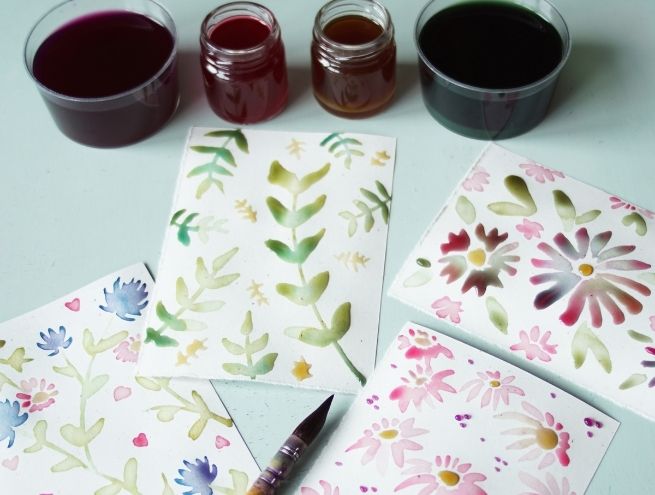
- Use watercolour paper to create pretty illustrations with your inks. They are miscible with each other and you can obtain shades by adding water.
- You'll notice that these inks tend to darken as they dry, particularly the purple of the red cabbage, which turns blue once dry. Similarly, when you mix certain inks directly on the paper, they can create an unexpected third colour when they mix: the purple of cabbage and the pink of beetroot sometimes turn green!
We hope you enjoyed this tutorial.
Don't hesitate to share your achievements on social networks by tagging us #salonCSF!