
DID YOU SAY KNITTING?
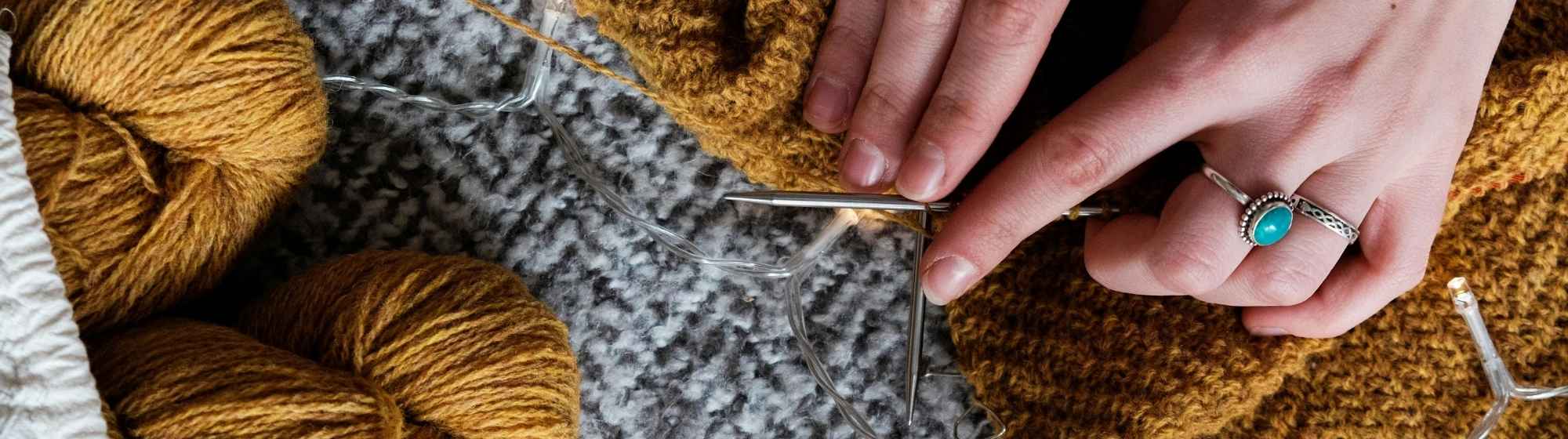
.jpg?h=480&iar=0&w=1120&rev=9debfc3b3b4041a0a5223dec9085cdec&hash=2201C8B6A6037577452DA90140FF2590) "Knit a Smile" is a fun, civic-minded project in which anyone can take part in creating artistic knitting installations! Créations et savoir-faire is well known for its "Together we are Monet" exhibition.
"Knit a Smile" is a fun, civic-minded project in which anyone can take part in creating artistic knitting installations! Créations et savoir-faire is well known for its "Together we are Monet" exhibition.What is knitting?
As with each of the techniques discussed in this series of articles on textile techniques, here's a little dictionary definition to get everyone on the same page.
Knitting : Interlaced knitted fabric, using special needles (Larousse) In Old French, the word tricot means "little stick", in reference to needles, while in English knit comes from "knot", in reference to stitches.
A little background to set the scene
With few existing fragments, the picture of the origins of the technique is blurred. The first authentic knitted items come from Egypt, fragments of Coptic socks knitted in white and indigo cotton, dating from the end of the 10th century.
The knitting technique was introduced to Europe by the Crusades, the development of trade relations and the Muslim conquest of the Iberian Peninsula. From there, it spread around the world through conquest, colonisation and travel.
© Canva
Men and knitting
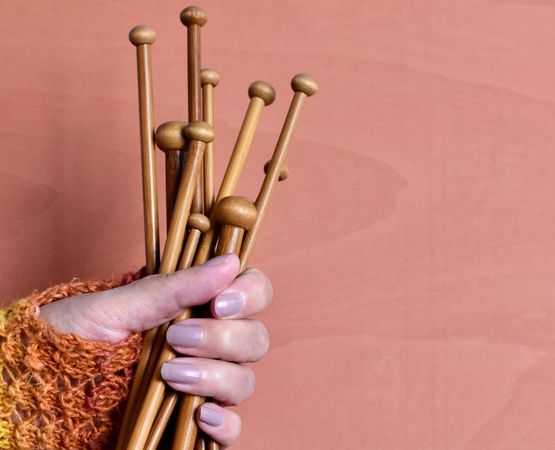
In the 16th century, knitting was an established craft driven by a powerful fashion trend: knitted stockings. For Renaissance men, knitted stockings were a wardrobe must, a marker of elegance and social status.
In response to this fashion, the first commercial knitting guilds appeared in Western Europe, to protect trade secrets, organise the profession and help the trade prosper. It was a man's business!
But, paradoxically, it was the simplicity of the technique, the portability of the work and the fact that it could be used for any purpose that made knitting so popular. Sailors and shepherds were great knitters. Sailors, who were often ill-equipped, had to protect themselves from hostile climates when they travelled the oceans, so they knitted the jumpers, socks, gloves and hats they needed, while shepherds, who had easy access to wool, knitted while watching over their flocks.
Legend has it that knitting was brought from Spain to England and Scotland, where it was taught to the native Shetlanders by Spanish sailors who had survived the sinking of the Invincible Armada. Fair Isle, one of the Shetland Islands, gave its name to a particular type of jersey pattern, jersey stitch, which itself takes its name from the well-known island.
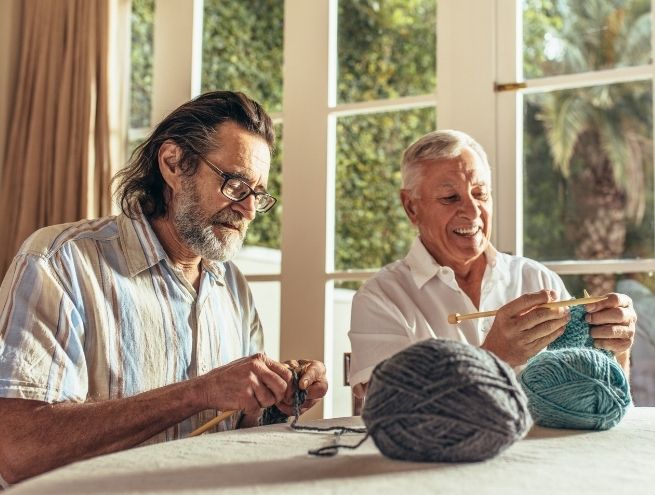
Knitting has become industrialised and hand-knitting has become a more feminine domestic and social activity, but all over the world, knitting is an activity that many men still engage in on a daily basis. This is the case in Iceland and Peru, for example, where men have been knitting for a very long time...

To find out more...
Go to the Victoria and Albert Museum's online collections in London:
With knitted objects dating from the 12th century to the present day, the collection showcases centuries of inventiveness. From underwear to outerwear, workwear to evening gowns, handmade or machine-made, professional or amateur, explore the rich diversity of pieces created in knitwear.
Discover Celia Pym, an artist who elevates mending to a work of art: www.celiapym.com and her instagram @celiapym
A top-of-the-range maintenance and creative restoration service for all your favourite pieces: www.lacliniquedupull.fr
Nugget from INA, 1968 report of a berger knitting...
A group of men who share a passion for knitting have decided to meet up every week in a café in San Francisco, USA. Their club slogan is "Listening, crafts and community".