EMBROIDERY : WHAT ARE THE DIFFERENT TECHNIQUES?
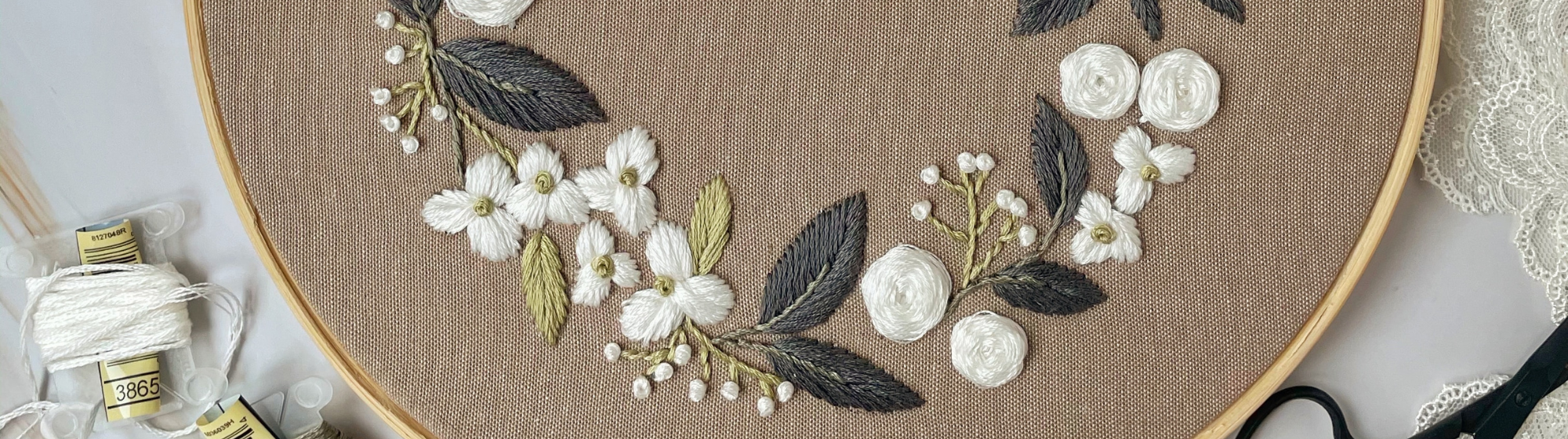
Embroidery allows you to customise textiles with your own designs. There are many embroidery techniques to choose from, depending on the material, the desired result and your expertise.
Below is a non-exhaustive list of the main possibilities offered by embroidery.
Get your needles!
Cross-stitch embroidery
Also known as counted-stitch embroidery, cross-stitch is the perfect way to start embroidering, even for children. This technique requires a canvas with weft and warp threads that can be counted, an embroidery drum, an embroidery needle, embroidery thread (such as ground cotton) and a pattern grid. You can also add pearls, sequins or other small embellishments to your work.
 Marie Claire Idées
Cross stitch, as the name suggests, involves embroidering cross stitches in a grid that creates patterns by placing the crosses side by side. It is therefore important to have a fabric with a visible weft, as it is this weft that serves as a reference for embroidering regular crosses.
If you're just starting out, choose an Aïda fabric, specially designed for cross-stitching. Its highly visible pattern will guide you for regular stitches.
Once you've mastered the technique, you'll be able to create magnificent works on fine linen cheesecloth that combines cross-stitch, half-stitch and quarter-stitch. The works of Marie-Thérèse Saint-Aubin are a fine example of this advanced technique.
 Marie-Thérèse Saint-Aubin
At Créations & Savoir-faire, you'll find a whole host of cross-stitch embroidery kits, including thread, needles, chart and fabric, among the treasures on offer from exhibitors.
Cross stitch is traditionally used to make embroidered decorative pictures. Some kits even include the frame with the rest of the equipment.
However, you may want to think outside the box and cross-stitch on everyday objects. There is a whole range of household linen that includes strips of Aïda fabric in their finishes. This allows you to embroider borders on kitchen towels, for example. You can also make cushions, pouches and bags by embroidering on linen. Why not create patch pockets on an embroidered linen jacket? Or a frieze on the bottom of a dress or an apron?
The possibilities are endless if the embroidered weft fabric is applied to another textile object.
Classic embroidery
The other most common embroidery technique involves simply embroidering with a needle and thread, following a design and using different stitches to vary the graphics. This technique has the advantage of being adaptable to all types of textile, even elastic, because it is not based on the textile weft, but solely on the line of the design to be followed.
First you need to transfer your design to the fabric to be embroidered. There are various techniques for this stage: freehand drawing with a textile felt-tip pen, carbon paper, water-soluble paper, etc.
The use of an embroidery drum is recommended to stretch the fabric and achieve a more even result. For elastic fabrics such as T-shirts, be sure to stretch the fabric evenly, and even put a vlieseline or interlining on the back to stiffen the fabric.
© Gio Gix / Unsplash
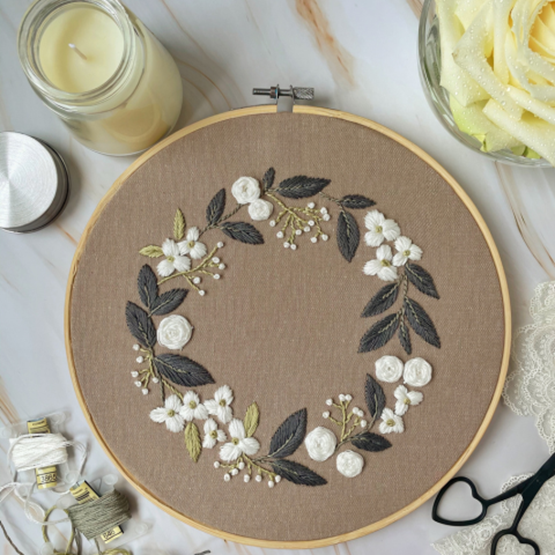
The basic stitches in classic embroidery are front and back. They can be used to draw straight and curved lines following the contours of a pattern. Filling is ensured by the flat past stitch, or even the encroaching past stitch for complete filling.
There is then a whole range of decorative stitches that can be used to create different graphic effects: throw stitch, stem stitch, chainette stitch, bouclette stitch, Boulogne stitch, festoon stitch, gribiche stitch, knot stitch, slipper stitch, post stitch, stitch.... And many more besides! Marie Claire Idées has a library of these points on its marieclaireidees.com website.
Choose your patterns and stitches according to your level. If you're just starting out, opt for simple designs that are easy to make using basic stitches, without too much filler.
Once you've got the hang of it, multiply the stitches to create increasingly complex embroideries! Your needle will become your paintbrush or your pen, and you'll be able to draw with your needle and create your own designs!
There are many books and courses available to help you perfect your embroidery technique.
Whether for fashion or decoration, this classic embroidery technique lends itself to all media. You can embroider all textiles by adapting your thread and needles. But you can also perforate cardboard, paper, leather, wood... to embroider notebooks, a bag, a tray...
 Marie Claire Idées
Darning: useful embroidery
As well as being decorative, embroidery can also be very useful, particularly when it comes to repairing damaged clothing or accessories. Ecological awareness is leading us more and more not to throw away our clothes and to give them a second life: a stain, a hole, a jumper that's starting to fray? No problem at all! Embroidery can fix anything!
Today, darning is even more visible and aesthetic. This is known as "Visible Mending".
Here are some of the techniques used for this artistic darning.
Sashiko embroidery
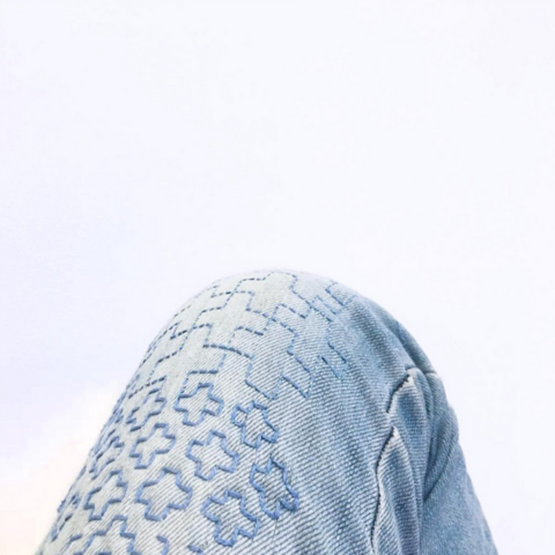
Sashiko embroidery, very much in vogue today, was long ago used in Japan to reinforce or repair clothing. These simple, geometric embroideries are done in front stitch with white thread. Most of the time, they are embroidered on a dark blue fabric (linen, cotton)... And this white-on-blue contrast has led designers to use them to customise or repair the wear on denim trousers, for example.
© We made Together
Remeshing
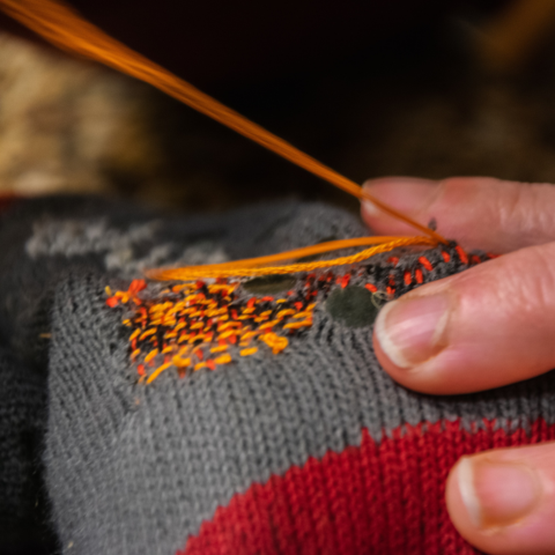
This technique is primarily used for darning wool. It can be used to repair holes in a jumper or socks.
Using a wool thread, stitch a horizontal weft on either side of the hole. Then come and weave a vertical thread, passing it over and under each horizontal thread, using the weaving technique.
You can use this ironing technique on textiles other than wool, by stitching the thread weft into any torn fabric.
© Joseph Sharp / Unsplash
Eyelet in festoon stitch
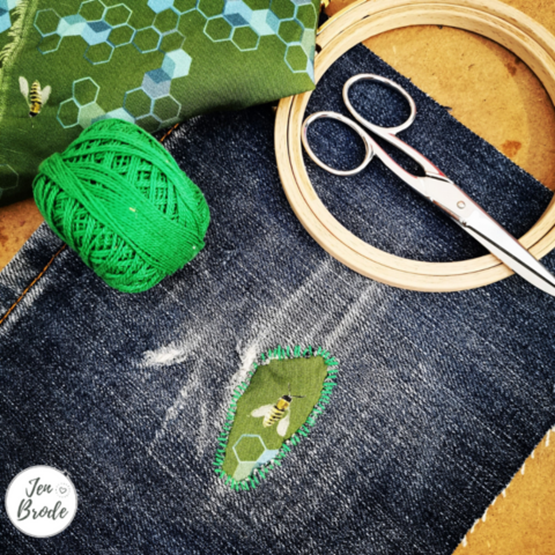
Rather than hiding a hole, you can make it a visible aesthetic asset by highlighting it. To do this, embroider a scalloped stitch around the hole, stopping the fabric fraying and creating a graphic eyelet. Play with a contrasting coloured thread. With this technique, the eyelet hole can be left openwork or the scallop stitch can be used to apply another fabric to the back of the garment with the hole, thus plugging the hole. The scallop stitch then becomes a kind of frame for the added textile.
© Jen Brode
Hide and seek
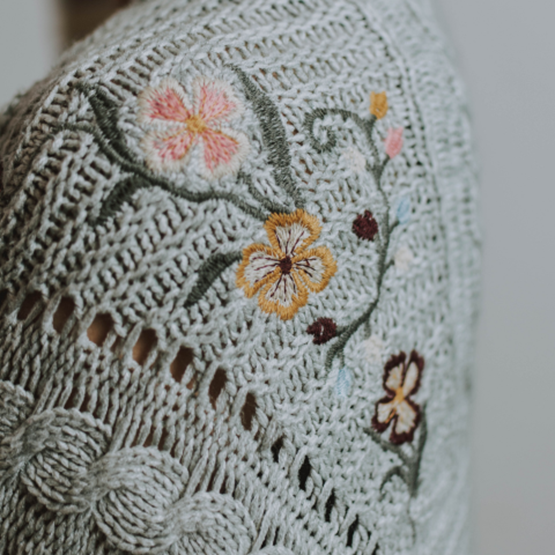
If one of your garments has a stain that can't be removed, hide it by embroidering a design over it. Embroidered initials or words, flower seeds, a small tattoo-style motif... You can even use the stain as a basic motif to inspire your embroidery!
© Lilartsy / Unsplash
Art embroidery
Used in art embroidery or haute couture, for example, specific embroidery stitches are legion. Here are some of the embroidery techniques listed. They all require specific training and often noble materials.
Ribbon embroidery
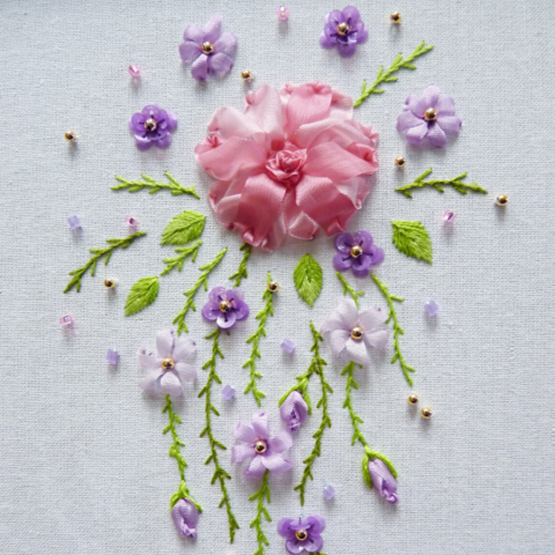
As the name suggests, this embroidery involves embroidering with a fine silk ribbon instead of thread. The specific stitches on the ribbon allow you to keep more or less length at each needle stroke, creating volume. This technique dates back to the 17ᵉ century. It is often used today to make flowers, and combines silk ribbon with traditional stitches using moulded thread.
© Carole Magne
Lunéville embroidery
This technique allows you to embroider pearls and sequins. This is done on the reverse side of the fabric using a special hook instead of a simple needle. This embroidery is often done on tulle stretched over a large frame, called an embroidery loom. Widely used in haute couture, tulles embroidered with pearls, sequins and sequins are then applied to garments.
 Zéfirina Studio
Le point de Beauvais
It is made of chain with a hook. Stitch the hook from top to bottom and pick up the thread under the fabric by hand.
White embroidery or Plumetis
This is a raised dot. It is often seen on cotton textiles called plumetis, which are decorated with embroidered weights in relief.
 © Pinterest
Richelieu embroidery
The design is embroidered in very tight scallop stitch, then the design is added by delicately cutting out the areas between the scallop stitches.
 Le blog broderie titoune
Hardanger embroidery
This embroidery technique uses the flat pastel stitch, running stitch, darning stitch, festoon stitch and other decorative stitches. First, solid motifs are tone-on-tone embroidered. Spaces are then delicately openworked between these motifs and finished with darning and festoon stitches.
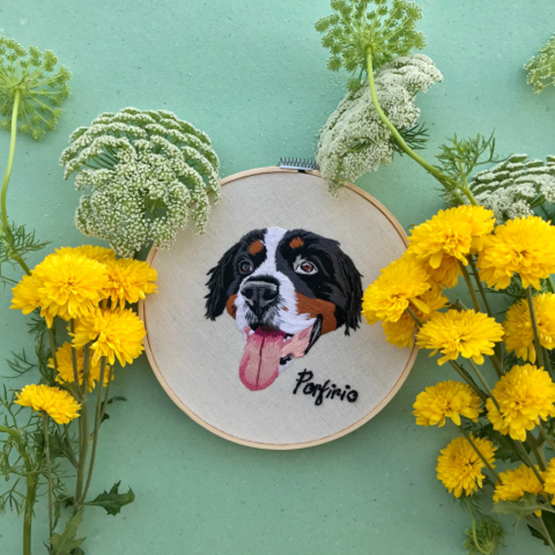
Needle painting
It allows you to reproduce the gradations of a painted motif, for example, simply by using threads and a needle. Multiply the overlapping past stitches to fill in the pattern, playing on the colour changes.
© Marina Meyer / Unsplash
Gold thread embroidery
It uses a fine gold thread called Jaseron to embroider the outlines of the design to be embroidered, and then a very specific thread called cannetille to fill in the designs and give the embroidery a metallic sheen. This embroidery technique is widely used for religious chasubles and military costumes.
 © Pinterest
Embroidery in relief
Also known as Stumpwork, it uses different elements to embroider in three dimensions. Artist Léa Stansal includes stumpwork in many of her works.
 Léa Stansal
Boutis and quilting
These techniques are more sewing than embroidery, but they do include some designs created with thread.
Boutis involves stitching two layers of fabric together to create patterns. Gradually, strands of cotton are incorporated into the quilted patterns to create volume.
© Kumiko Boutis
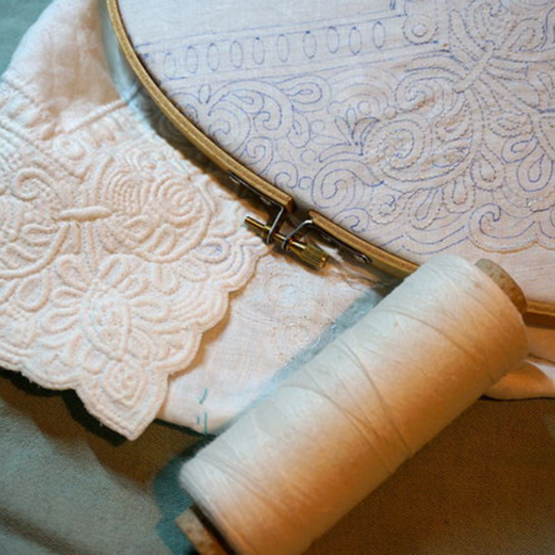
Quilting is related to patchwork. Once you've assembled your patchwork, come and quilt it. Layer a lining, a fleece and your patchwork. Stitch these 3 layers together, creating designs that sometimes follow the assemblies of the patch, and sometimes break away from them to create embroidered motifs.
Machine embroidery
Another embroidery technique that offers a host of possibilities, the embroidery machine can be programmed electronically to create all your designs, with one or more needles embroidering at the same time! In addition to precision and speed of execution, embroidery machines can also be used to produce small series of objects embroidered with an identical motif.
 PFAFF
PFAFF Marie Claire Idées
Our embroidery inspirations
Get your needles!
I hope this overview of the various ways of embroidering will give you a better idea of which technique to choose, depending on the work you want to make and your level of skill... And above all, that it will inspire you to try your hand at new embroideries!
Feel free to share them on social networks #salonsdiy