
Patchwork, did you say Patchwork(s)?
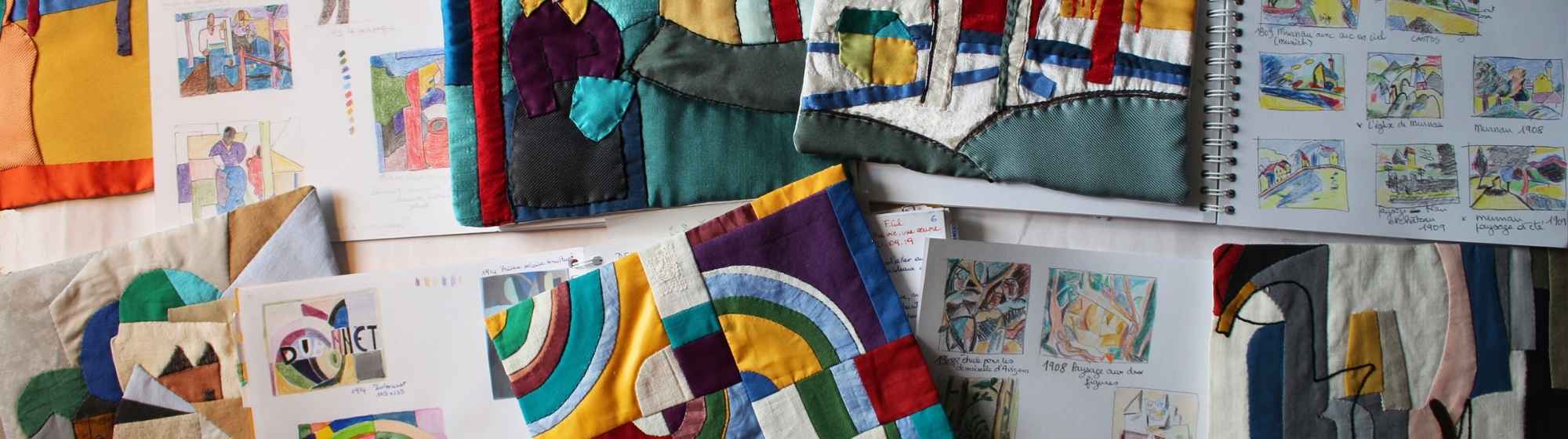
Quilting is a hobby, a passion, sometimes even a true philosophy of life. Assembling pieces of fabric, from modest scraps to precious fabrics, it is expressed through blankets, clothing, decorative objects or works of art. Whether made from simple coloured squares or clever geometric compositions, popular and anonymous or a textile artist's masterpiece, patchwork combines memory and modernity.
This second article in a series devoted to the arts of thread offers a chance to rediscover this technique, long considered a "ladies' handiwork", but which is now enjoying a real revival. Like embroidery, knitting and crochet, patchwork embodies this desire to make things with one's hands, and inspires hobbyists, fashion designers as well as contemporary creators.
What is patchwork?
A definition is needed to put everyone on the same page:
Patchwork: sewing work consisting of assembling, with a needle or machine, pieces of fabric of various shapes and colours to form a new work. (Larousse)
A little background to set the scene
Patchwork is probably as old as needle and thread. Traces of textile assemblies can be found as far back as antiquity, in Egypt, India, Persia, Greece and Central Asia. These early patchworks had a utilitarian as well as an ornamental function: repairing, recycling, protecting, but also embellishing.
In Europe, the technique was used from the Middle Ages onwards: the clothes worn by Crusaders under their armour, the caparisons protecting horses during tournaments, and standards were quilted. Harlequin's "piécé" (assembled) costume already illustrates this tradition. But decorative and artistic patchwork, as we know it today, is very recent.
Patchwork, a universal textile art
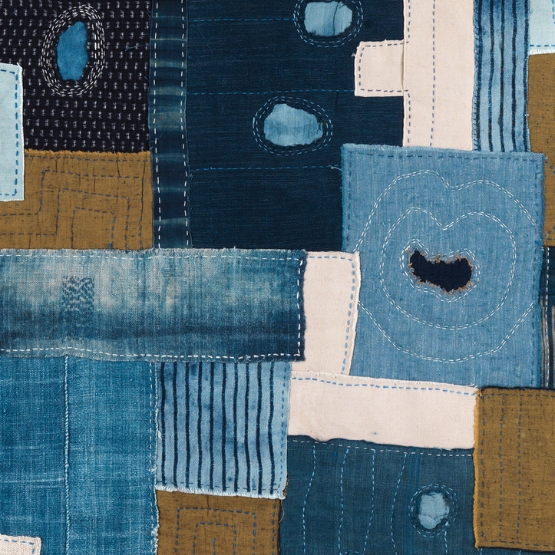
From Indian kantha to Japanese boro assemblages, via European and American quilts, patchwork is a practice shared by many cultures. It is everywhere the witness of family and collective memory. Each sewn piece tells a story: the life of a garment worn, a family event, an exchange between generations.
Over the centuries, every country in Europe has contributed to the development of patchwork. But it was England that saw the apotheosis of this production, at least until the dressmakers of the New World came to compete for this honour.
Quilting in England
After the return of the Crusaders, women made extensive use of upholstery for lingerie in precious fabrics (silk, satin, taffeta), reserving it for the nobility. More humble women used used fabrics and seamstresses' scraps to make clothes and blankets.
It was during the Elizabethan period (1558-1603) that patchwork became an art form, and Mary Stuart, Queen of Scots, devoted her reclusion to patchwork; some of her works are now preserved in the Tower of London.
The richest works date from the Victorian era (1837-1901). Quilts are mentioned in wills and bequeathed in the same way as precious objects. Quilters went from town to town quilting and were paid according to the amount of thread they used. The "marker", who drew the quilting lines with a pencil, could create very complex designs; Joe Hedley is the most famous scorer of the XVIIIᵉ century.
The beginnings of patchwork in America
The beginnings of patchwork in America
In the XVIIᵉ century, the first European settlers in America experienced misery. The women had to make their blankets from recycled fabrics (used clothes, grain or flour sacks) and stuff them with materials such as straw, dry leaves or paper.
These works were assembled with knots, as quilting was impossible with such materials. It was only later, with the cultivation of cotton and the rearing of sheep, that regular quilting appeared.
It was during the pioneering era that blocks were invented, enabling the construction of works in small pieces that could be worked everywhere, even in trolleys.
The Amish
It's impossible to talk about American patchwork without mentioning the Amish tradition, which will feature prominently in the Salon's Art Textile exhibition, with pieces from the Charles Edouard de Broin collection.The story of the Amish begins in Switzerland in the XVIᵉ century, before they emigrated to North America, where today they live mainly in Pennsylvania, Ohio and Indiana.
Their quilts reflect the simplicity of their lifestyle.
Amish patchworks are characterised by their plain fabrics, the absence of bevels at the corners and their repetitive blocks limited to two colours.
The Amish of Pennsylvania have remained the most faithful to tradition, while other communities have incorporated variations in motifs.
These constraints give their quilts a wonderful simplicity and visual power.
The American pioneers gaveevocative names to their blocks, facilitating exchanges and pattern recognition. They are inspired by: everyday life (Log Cabin, Shoo-Fly...), nature (Evening Star, Snow Ball...), the Bible (Jacob's Ladder, David & Goliath...), or places (Road to Oklahoma...).
Log Cabin
One of the most famous motifs, often considered to be American, but attested as early as 1700 England and Sweden. The central red square symbolises the fire in the hearth; the variations in light and dark tones create countless compositions: "the barn", "lightning", "furrows" This simple, practical motif accompanied the lives of the pioneers, illustrating their attachment to home and domestic warmth.
Patchwork or Quilt?
The same work is called a Quilt in the United States and a Patchwork in Europe. The word Quilt, of Latin origin, means "padded" or "quilted", while Patchwork (from patch = pieces and work = work) refers to the assembly of the top of the work.
Quilt in the XXᵉ century and today
In the XXᵉ century, patchwork underwent several revivals. In times of crisis, it regained its primary function: nothing is lost, everything is reinvented. But in the 70, it also became a creative manifesto. The hippie movement, DIY and the rediscovery of craft traditions are giving it new visibility.
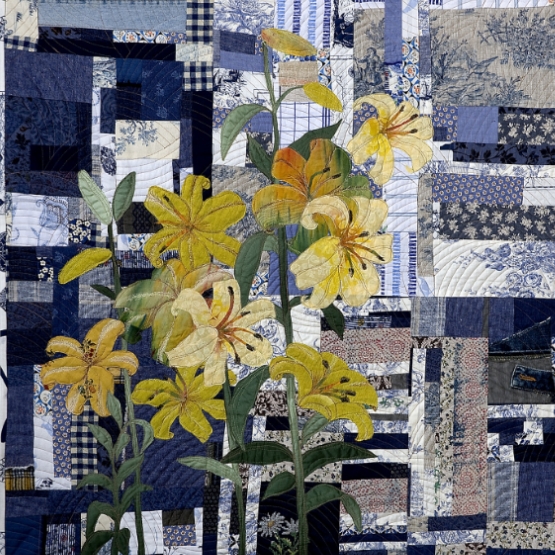
Playful assembly is all the rage these days! Once the preserve of our grandmothers' quilts, patchwork is making a comeback in a variety of forms and materials. The rule is simple: dare to combine colours and prints in the same piece.
A desire to work together
As with embroidery, patchwork brings people together. Quilting clubs, collaborative workshops, group projects... this practice encourages people to meet and share. Each piece contributed by a participant becomes part of a larger whole, like a human mosaic.
Patchwork is a wonderful way of bringing cultures together. The universal and popular nature of patchwork has brought people together over the centuries. The principle of recovery makes it more relevant than ever. An invitation to sew, assemble, tell and share.
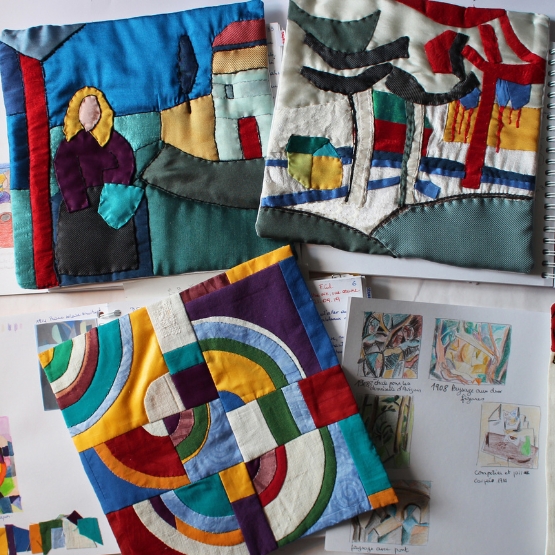
- Patchwork, a mosaic of the world
- The book by Catherine Legrand published by La Martinière
- From Antiquity to the present day, a journey in images across the continents to discover a universal textile art, patchwork.
To get started or perfect your skills, find various patchwork workshops at the show.