
LACE – DID YOU SAY LACE?
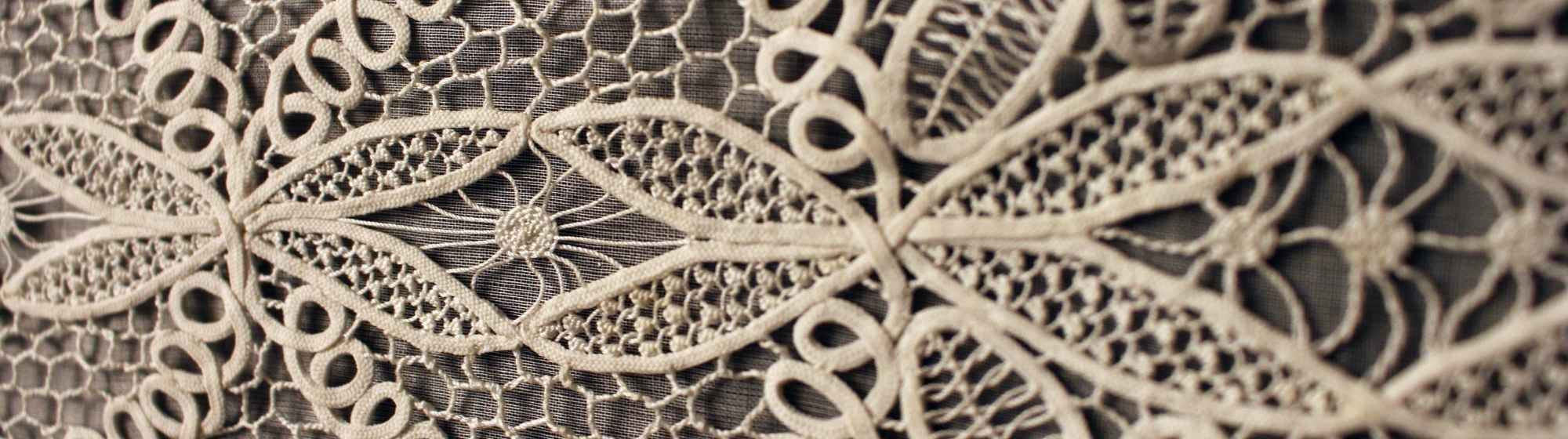
Following Embroidery, Did You Say Embroidery(ies), which focuses on how artists and designers have embraced this technique as a medium of expression, this article on lace offers a glimpse into this craft, which is becoming a real heritage issue.
What is lace?
A little dictionary definition never hurts to get everyone on the same page!
Lace: (from the French *dent*, meaning ‘tooth’) An openwork fabric formed by interlacing threads to create a mesh background against which decorative patterns stand out.
Literary: Which evokes delicacy and refinement. (Larousse)
A little background to set the scene
Lace originated in the 16th century in Italy and Flanders. First appearing during the height of the Renaissance, this exceptional openwork fabric was produced using bobbins or a needle, with skills passed down orally within families or at various lace-making schools, such as that run by the Apostoline Sisters in Bruges. The major lace-making centres in France, Flanders and Italy, as well as throughout Europe—from Portugal to Spain and as far as Russia—have developed distinctive techniques that allow them to be identified by their designs, working methods, materials used or applications. Throughout Europe, right up until the 19th century, lace was a luxury item used to adorn the clothing and interiors of the elite.
France was the leading producer of lace in the 18th century, with needle-made pieces such as those from Argentan or Alençon lace, followed by the introduction of tulle-based lace (Valenciennes, Blonda, Chantilly), all made using bobbins.
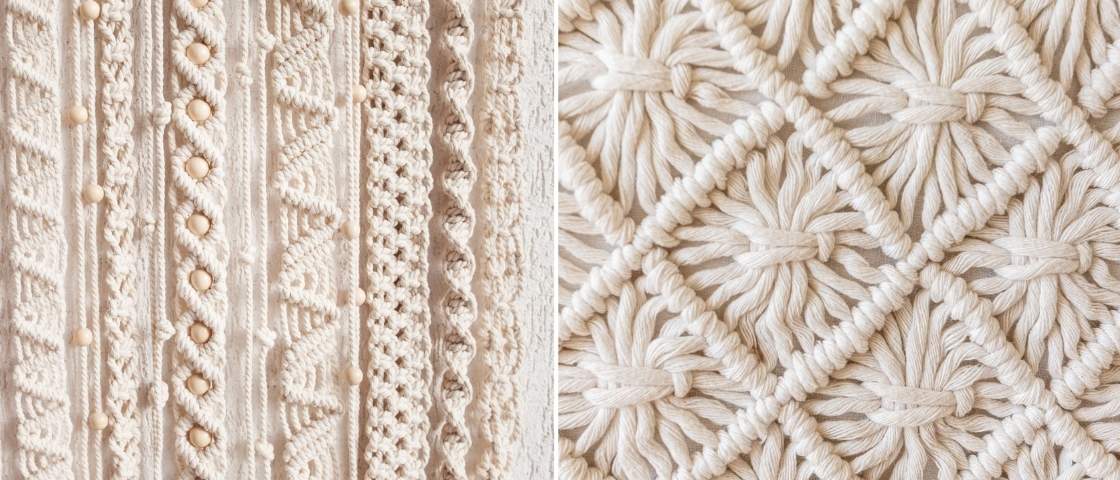
In the Bayeux region, for example, the thousands of pieces of lace produced fall into three main categories: ‘Bayeux’ lace in white linen or cotton, ‘Chantilly’ lace in black silk, and finally ‘Blonde de Caen’ lace in unbleached silk.
The example of the distinctive characteristics of ‘Blondes de Caen’
The name of this lace comes from the fine, cream-coloured, pearlescent silk thread used to create the most delicate of all bobbin laces. Delicate, smooth and silky to the touch, its magical effect comes from the almost invisible tulle upon which magnificent motifs float, often arranged in garlands of flowers or palm leaves, crafted from floche silk and very fine silk thread, giving it a very special sheen and a unique luminosity. This Normandy lace has been produced in Caen since the late 17th century, mainly by women working from home. Elegant, expensive blond fabrics were favoured for making voluminous bodices, large collars, shawls and stoles that adorned the attire of the aristocracy and upper middle classes from the 17th to the late 19th century.
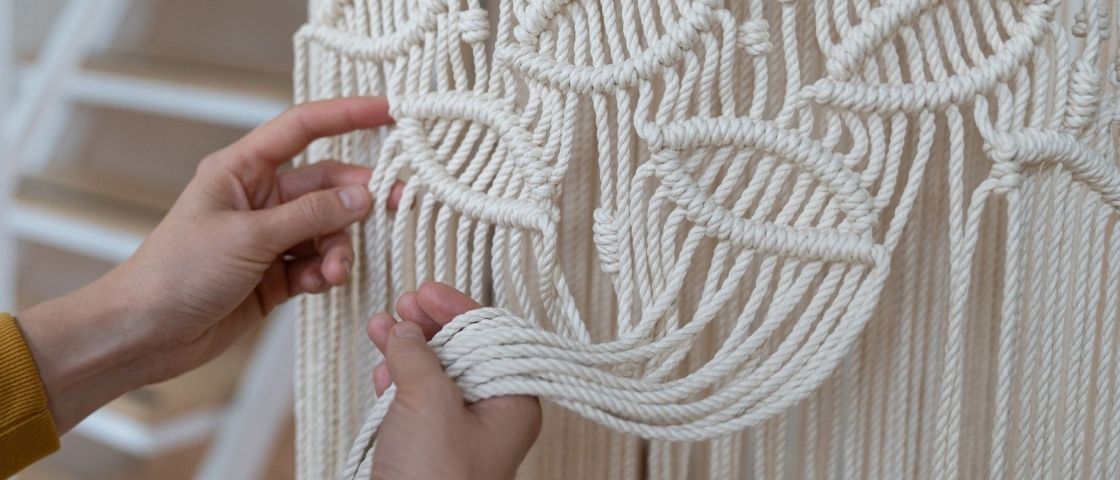 © "Dentelles et blondes" Association
Around 1750, Caen had 18 manufacturers. There will be 102 of them in 1850. But lace is also a matter of fashion, and this marked the beginning of the decline of blonde lace in favour of the black silk lace that was so popular during the reign of Napoleon III and Eugénie.
Another example of the dynamism of a Belgian region: at the start of the 20th century, there were around 47,000 lace-makers in Belgium, most of whom worked in Bruges, which led to the founding of the Bruges School of Lace-making in 1911. They made lace trims for men’s and women’s clothing, as well as christening gowns, cuffs and special collars.
In fact, there are many lace collars. They were often detachable and served as accessories that allowed one to refresh the look of an outfit at little cost. There were many different styles, all of which helped to give the clothes a distinctive look.
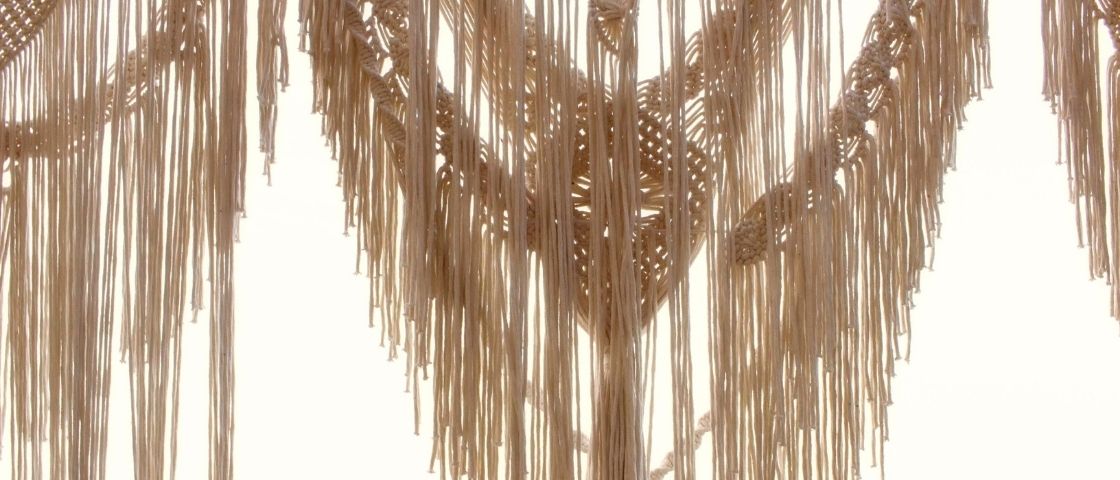 © The Tuulikki Chompré collection, showcased at the 2018 exhibition, features a range of jewellery sets. Each of these collars tells a story of intricate detail, with infinite variety and richness.
Machine-made lace was introduced later – but it offered an affordable alternative to the intricate lace produced using traditional methods. Later, with the introduction of machine-made tulle, mixed techniques were developed which involve applying patterns created using bobbins or a needle onto a tulle background.
In the 19th century, lace-making became mechanised
Produced exclusively by hand by lace-makers for centuries, the 19th century saw genuine technological innovations that led to the mechanisation of the production of this very expensive fabric. An industrial revolution: lace becomes an ‘industrial art’. The history of Calais-Caudry® machine-made lace began around 1817 with the arrival of a few English textile engineers; this northern town then became the national centre for lace-making. Today, the preservation of mechanical lace-making skills depends on around fifteen manufacturers (compared to 230 in the 1950s) and the 650 Leavers looms in the Hauts-de-France region, out of the 1,000 recorded worldwide. Twelve of these artefacts are held in public collections, divided between the museums in Calais and Caudry.

Lace: a local cultural heritage
Lace-making is not merely a craft; it is also part of a region’s cultural heritage, as evidenced by the inclusion of Alençon lace on UNESCO’s Intangible Cultural Heritage list in 2010, and the transformation of the Lace Centre in Bruges into a world-renowned centre of lace expertise.
This European textile tradition, this outstanding craftsmanship and all its associated aspects are now one of the key cultural assets to which local authorities pay particular attention. It is to pay tribute to this history and unique craftsmanship that the Alençon Museum of Fine Arts and Lace, together with the Cité de la Dentelle et de la Mode in Calais, commissioned the Polish artist, NeSpoon, to create murals that transcend the graphic potential of lace.
© NeSpoon – façade of the Alençon Museum
To find out more...
Visit the Cité de la Dentelle and Fashion in Calais
- 135 Quai du Commerce, 62100 Calais
- Tel: 03 21 00 42 30
- High season (1 April – 31 October): open daily from 10am to 6pm, except on Tuesdays
- Low season (1 November – 31 March): open daily from 10am to 5pm, except on Tuesdays
- Exhibitions and demonstrations of lace-making on Leavers looms and other lace-making techniques.
The Bruges Lace Centre... a museum and a knowledge centre! He teaches lace-making in the very place where it all began, in the renovated former Lace School of the Apostoline Sisters.
Bayeux lace at the City Museum of Art and History
Introduced to Bayeux in the 17th century at the behest of the bishop, hand-made lace reached its peak in the 19th century. The speciality of Bayeux lace is bobbin lace. The most luxurious pieces are presented in the style of a haute couture showroom, whilst the technical aspects of this textile art are explored in the atmosphere of a lace-making workshop.
A wonderful website for the Dentelle de Calais-Caudry® label
“ Lace, a European textile art" a beautiful slideshow on the history of lace