
FOR A NEW INTERIOR: UPCYCLE YOUR FURNITURE!
A few tips for personalising basic furniture
If you’ve bought standard furniture from a major Swedish retailer, for example, there are some simple ways to personalise it:
- Replace door or drawer handles with vintage ones you’ve found at a flea market, leather straps or rope
- Decorate the walls with wallpaper or self-adhesive wall decals
- Apply a primer, followed by a concrete-effect paint, for example
- Swap the standard legs for antique turned wooden legs, or, alternatively, coloured metal legs
You’ll see that you don’t need to be an engineer or a designer to upcycle a piece of furniture. All it takes is a bit of elbow grease and a bit of imagination to refurbish and personalise your furniture.
Discover our inspiration and ideas for giving a new lease of life to the furniture gathering dust in the loft!
The term ‘upcycling’ comes from the English words ‘up’ and ‘recycling’
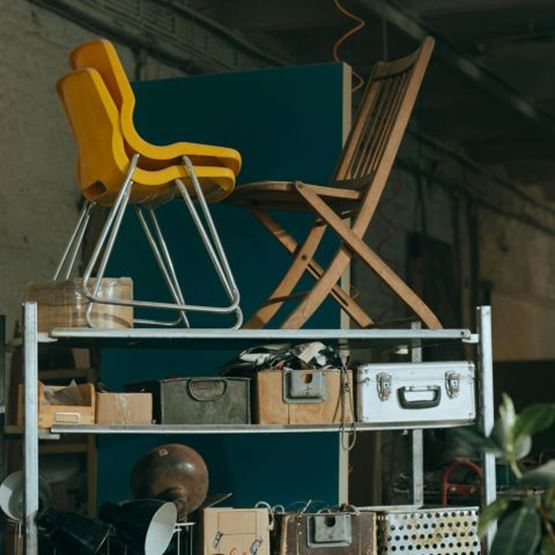
Upcycling your furniture means giving a new lease of life to materials and objects by breathing new life into them! As well as giving this waste a new everyday purpose, we’re also taking the opportunity to give it a makeover!
Upcycling embodies the values of reuse, recycling, responsible consumption and aesthetics.
The 3 major trends in upcycling for home décor
1. Re-anchoring
Or how the future draws inspiration from the past.
Generally speaking, when it comes to your interior design, mix vintage and contemporary pieces. The most inspiring interiors now combine upcycled furniture with modern pieces. An antique table can sit alongside designer light fittings, whilst a refurbished sideboard fits perfectly into a minimalist interior.
This combination creates more personal spaces and avoids the ‘brand-new’ effect, which is often seen as impersonal.
And when revamping your décor, do feel free to showcase the traditional craftsmanship that went into making the piece of furniture you’re restoring, whilst adding a touch of modernity:
- Repaint a Louis XV chest of drawers in Klein blue, whilst retaining its original brass handles, which have been cleaned and polished
- Highlight a turned wooden base by gilding it
- Keep a lamp base with its vintage patina and give it a modern twist with a lampshade that’s black on the outside and metallic on the inside.
 Image generated by AI
2- Emphasising imperfection, the handmade, and the passage of time
Scratches, wood grain, signs of ageing and natural patina are no longer systematically removed. On the contrary, they add to the charm of the piece and tell its story.
This trend, inspired by craftsmanship and the ‘wabi-sabi’ movement, celebrates authenticity and stands in contrast to the pursuit of industrial perfection.
Your wooden floor is really damaged, so you’ve decided to lay a raw concrete floor on top of it. How about leaving just a square of old parquet flooring right in the centre of the room? Like a tapestry, it traces the evolution of your home over time…
Have fun applying the Japanese art of Kintsugi – which involves repairing cracked crockery with gold powder and resin – to your upcycled furniture. Highlight the slit in a wooden tray by injecting gold-coloured resin into it.
 Image generated by AI
3- Creative reuse
Repurpose a piece of furniture: turn a ladder into a shelf, transform an antique trunk into a coffee table, or cut out the centre of a chest of drawers with a jigsaw to turn it into a vanity unit for your bathroom.
To give your furniture a new lease of life, you do, of course, need to have some furniture to recycle!
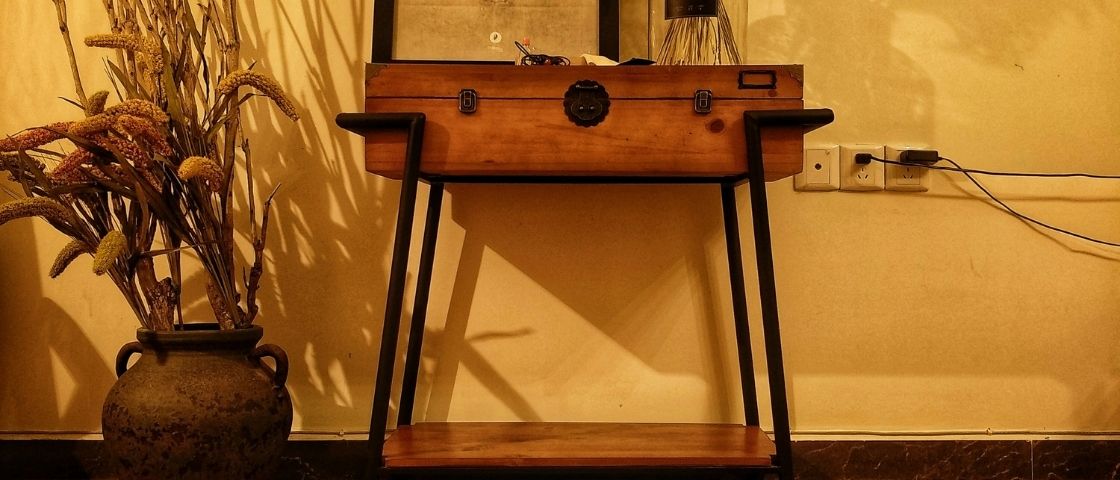
There are plenty of places to find items and furniture to give a new lease of life. You could simply decide to customise your existing furniture – a much more economical solution than buying new furniture, and one that helps avoid overconsumption. Perhaps you have some hidden treasures lying around in your loft or your family’s lofts? The customisation ideas set out in this article will help you see your grandmother’s old Norman wardrobe in a new light. As well as providing plenty of storage space, it’ll become a centrepiece of your interior design once it’s been given a makeover!
The joy of hunting for furniture
Don’t you have an attic? Do think about the ‘bulky waste’ in your neighbourhood. There are many treasures to be found whilst wandering the streets, picking up furniture that others have thrown away. These pieces of furniture are often damaged or broken, but repairing them is also a way of customising them to suit your taste! There are even apps nowadays that let you pinpoint the location of furniture you can pick up off the street!
Finally, if you don’t have any furniture to collect, the Emmaus is a goldmine for finding furniture to customise! And you’ll be practising responsible consumption by recycling second-hand items.

Please note: All the tips given in this article on how to transform an antique piece of furniture into a modern, on-trend piece can also be applied to new but basic pieces of furniture. This way, you’ll have bespoke furniture at a lower cost!
If the piece of furniture you want to give a makeover is made of wood, you’ll need to sand it down!
Preparing your furniture properly
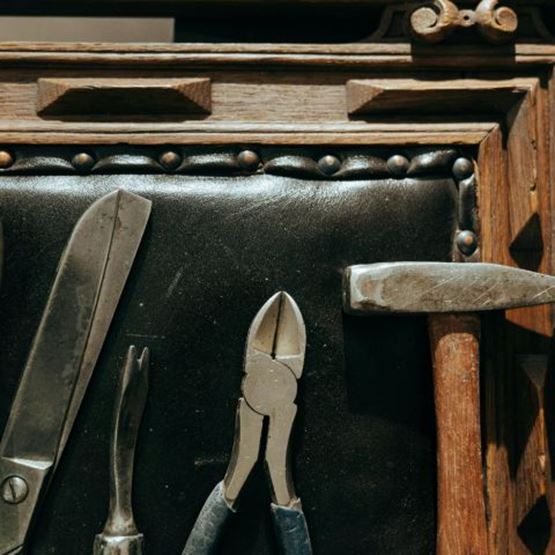
You might be pleasantly surprised to find that stripping the finish reveals some lovely wood, which will restore the piece’s charm. And if the wood isn’t of a high enough standard, sanding it down will ensure better adhesion for the paint or other materials you use to give it a new lease of life. To optimise sanding, particularly in the grooves of mouldings, Dremel offers a wide range of tools designed for detailed sanding. Specialised brushes can also be used to restore the shine to antique metalwork on furniture!
Paint is a practical and easy way to give old furniture a new lease of life!
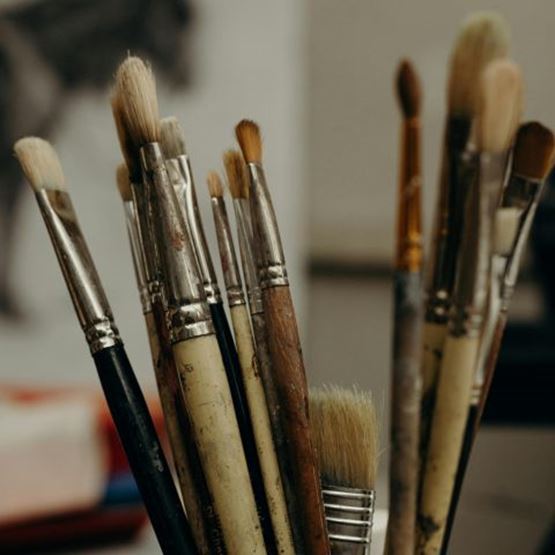
A stroke of the brush!
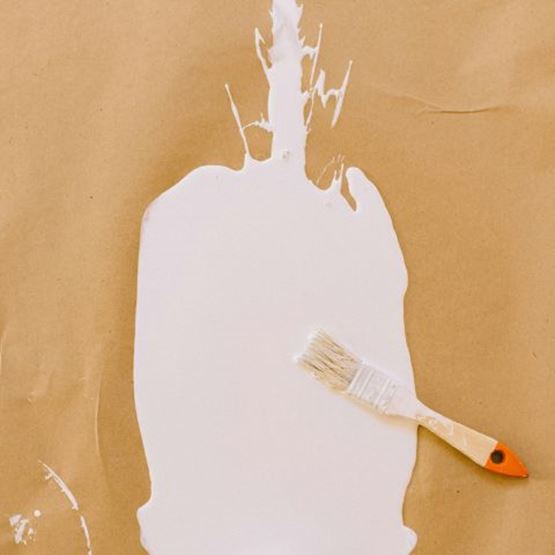
When dealing with a variety of materials (wood, plastic, melamine, fabric, etc.), a primer is a good way to prepare your furniture for its second life.
At the Créations & savoir-faire exhibition, please feel free to ask any questions you may have of the decorative painting specialists in attendance, as well as the designers giving demonstrations in the ID•Déco area. They will be able to advise you on the right pre-treatment products for your furniture.
Specialist in decorative painting
Annie Sloan suggests you decorate your furniture with patterns: ethnic-style patterns on a chest of drawers, textile-inspired designs by recreating a fabric-inspired pattern on a small piece of furniture, or a decorative detail on the leg of a chair…
Geometric patterns and modern patterns go very well with 1950s-style furniture.
If you’d like patterned furniture but can’t draw, why not go for wallpaper!
Paper decorations!
Cut out pieces of paper to match the dimensions of the panels on a wardrobe, chest of drawers or chair, and stick them on using wallpaper paste. Adeline Klam has put together a tutorial on how to cover the drawers of a small piece of furniture with her Japanese paper.
Feel free to repurpose unusual recycled materials to make furniture
Mix and match techniques and materials
To take upcycling a step further and create striking décor, do give it a go by repurposing unusual recycled materials to make furniture.
At Marie Claire Idées, we’re using our collection of buttons to create an original mosaic on the door of a piece of furniture.
Mistakes to avoid
As you’ll have realised, the more carefully you follow the steps involved in renovating and transforming your furniture, the better the result will be. If you try to rush things, you risk making mistakes that will ruin your creation:
- Neglecting to prepare surfaces properly: whether you’re painting or wallpapering varnished wood, tiles, chipboard, etc., it is essential to clean the surface, sand it if necessary, and, above all, apply a primer specifically designed for your type of surface. Without this, your project will not stand the test of time.
- Choosing unsuitable materials: depending on how you intend to use your upcycled furniture, choose the materials carefully to give it its new look! A mosaic-patterned wallpaper might not be the best choice for a coffee table that will often be used for drinks with friends; just as delicate raw silk wouldn’t be very suitable for covering your favourite footstool… Think about durability. If you’re ‘smitten’ with a delicate material, use it for picture frames, furniture upholstery… or on surfaces that won’t be subject to regular wear and tear.
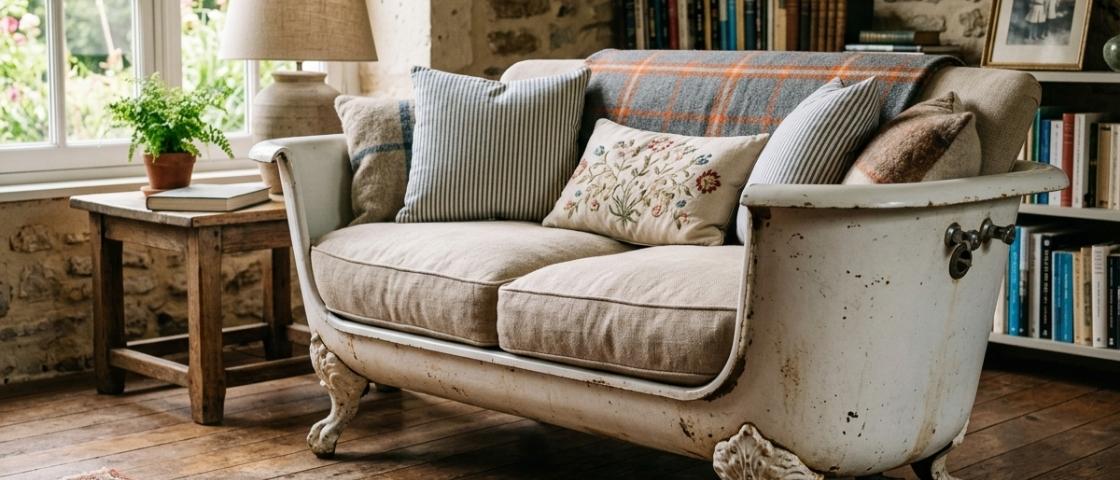
- If you’re rethinking the functionality of a piece of furniture, make sure it remains practical for everyday use. For example: cutting out the front of a cast-iron bath to turn it into a sofa. The result is certainly spectacular, but in reality, the seat remains stiff and not very ergonomic; the weight of the cast iron makes it impossible to move, and its seating capacity is very limited compared to the amount of space it takes up in the room.
Create your own bespoke décor with upcycling
As you’ll have realised, upcycling involves three key criteria:
- Use objects, materials and recycled items as a basis for creativity.
- Carefully consider the new purpose of the recycled item so that it serves a practical purpose in everyday life.
- Make the most of this makeover to enhance the object’s appearance.
In this way, you will become an ambassador for a more ethical approach to consumption. When everyone is raving about your décor, you’ll be able to boast not only about its beauty, but also its ingenuity and the fact that you’ve reused materials!