
SOLARPUNK TREND: CREATING IN HARMONY WITH NATURE AND LIVING THINGS
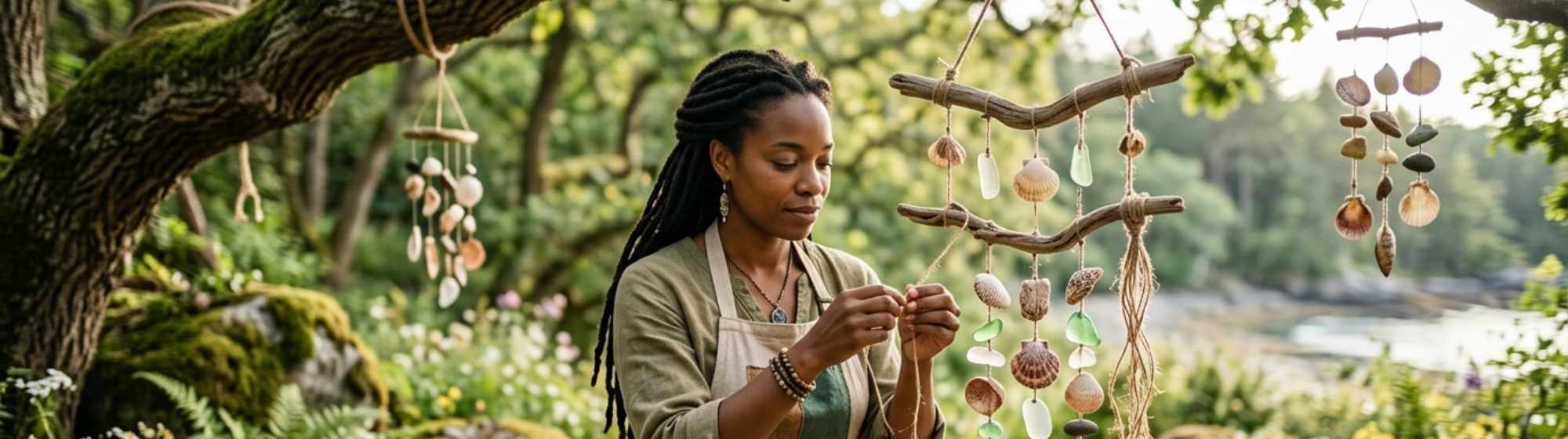
The term ‘Solarpunk’ describes a world in which humankind and nature live in harmony within a society that is committed to environmental protection and equality. Creating in the Solarpunk spirit is therefore not just about making an object; it is also about observing nature, harvesting with respect, reusing, and imagining more harmonious ways of living alongside the natural world. Combining poetic aesthetics, craftsmanship and environmental awareness, solarpunk DIY encourages us to slow down and transform the natural resources around us into thoughtful and sustainable creations.
DIY Solarpunk: creating with what nature provides
As you’ll have realised, to create something in the Solarpunk style, you’ll need:
1. Give preference to natural materials
Don’t just pick plants on a whim; collect only those that have already fallen to the ground or have dried out… Follow the rules on foraging when out walking in the forest or on the beach… By following these guidelines, you can gather twigs, dried grasses, wilted flowers, shells, pieces of driftwood or even plant fibres to create whatever you like using these raw materials provided by nature.
2. Promoting recycling
For non-natural elements in your creations, try to reuse what you can: beads from a broken necklace, a cardboard box, string salvaged from the vegetable patch… Anything can be used as a creative material!
3. Reducing waste
Simply using natural and recycled materials for your creations helps to reduce the amount of waste produced during the making process. Always bear this waste reduction in mind when you’re creating. For example, when cutting out shapes, make sure you optimise the space so that you can cut out as many shapes as possible from the same piece of material.
4. Cultivating a mindful relationship with living things
As well as being sustainable and eco-friendly, Solarpunk creations encourage us to engage with nature; they celebrate its beauty and highlight its unique characteristics.
 © Image generated by artificial intelligence
Here are three creative ideas to try this summer to celebrate the beauty of the natural world.
Making a mobile that plays with the sun’s rays
Make a suncatcher using natural materials. Hanging from a tree branch or a window frame, it will capture the sun’s rays, concentrate them and transform them into magical rainbows!
In the wild, collect:
- A piece of driftwood or a pretty branch that has fallen to the ground
- Shells containing mother-of-pearl
- Pieces of polished glass washed up by the sea
- Pebbles or stones containing quartz
- Dried ‘pope’s coin’ flowers
Get:
- Faceted pearls
- Candy wrappers with a metallic sheen
- Natural twine made from flax or cotton
You’ll also need a pair of scissors.
Gently clean and dry all the items you have collected and recycled.
Cut various lengths of string.
Use simple knots to secure items along the length of each piece of string. For example, a bead a few centimetres from the start of the string, then a pebble, then a piece of mother-of-pearl and finally a papal coin at the end of the string, like a tassel. Make several decorated strings of various lengths in this way.
Tie all these pieces of string to the branch, taking care to create a balanced arrangement.
Add a small loop of string to the centre of the branch so that you can then hang your mobile somewhere where it will catch the sunlight.
 © Image generated by artificial intelligence
Creating a poetic hanging garden
If you don’t have an outdoor garden, creating a small hanging garden indoors is a great way to bring nature into your home, even in a limited space.
You will need:
- Reusable jars, glass jars and other small, lightweight containers
- Strong natural rope
- Plants suitable for this mini garden (herbs, succulents, trailing plants)
- Potting compost
- A few gardening tools and a pair of scissors
Cut at least three long lengths of rope. Tie them at one end, then tie a second knot a few centimetres further down to create a loop for hanging.
Create a harmonious arrangement by hanging the pots at different heights, spread out along the various strings.
Fill each pot with potting compost and arrange the plants in them, varying their shapes and textures. Rosemary, thyme, ivy and succulents create harmonious, low-maintenance combinations.
Hang your garden in such a way that the plants have a source of natural light.
This hanging garden will change over time: you’ll be able to harvest the herbs, add seeds to alter its composition, and train the trailing plants along the ropes…
 © Image generated by artificial intelligence
How to make a garland of dried flowers
Make a garland using the flowers you’ve picked over the summer to create a lasting memento of your holiday that will last for many months to come.
Choose flowers that are particularly well suited to being dried upside down:
- Sprigs of lavender
- Immortelles
- Grasses
- Statice
- Wax flowers
- Craspedias
- Some gypsophila…
Make sure you choose local, seasonal flowers, grown in your own garden or by responsible florists.
Group the flowers into small bunches and hang them upside down in a dry, dark and well-ventilated place for several weeks.
From an old, worn-out sheet or tablecloth, cut out long, narrow strips of fabric. Use it as string to gently tie each small bouquet together in a garland, one after the other, alternating between different varieties and textures.
You can opt for a dense, bohemian arrangement or, conversely, a minimalist garland.
Hang your garland along a wall or above a table, for example.
 © Image generated by artificial intelligence
Celebrate life!
Through these poetic creations, summer becomes a space for sensory experimentation where craftsmanship, imagination and respect for living things come together. An invitation to slow down, to observe and to create objects that reflect our intimate connection with nature.
And what about you – what are you going to create using summer’s natural materials? Share your creations using #salonCSF